

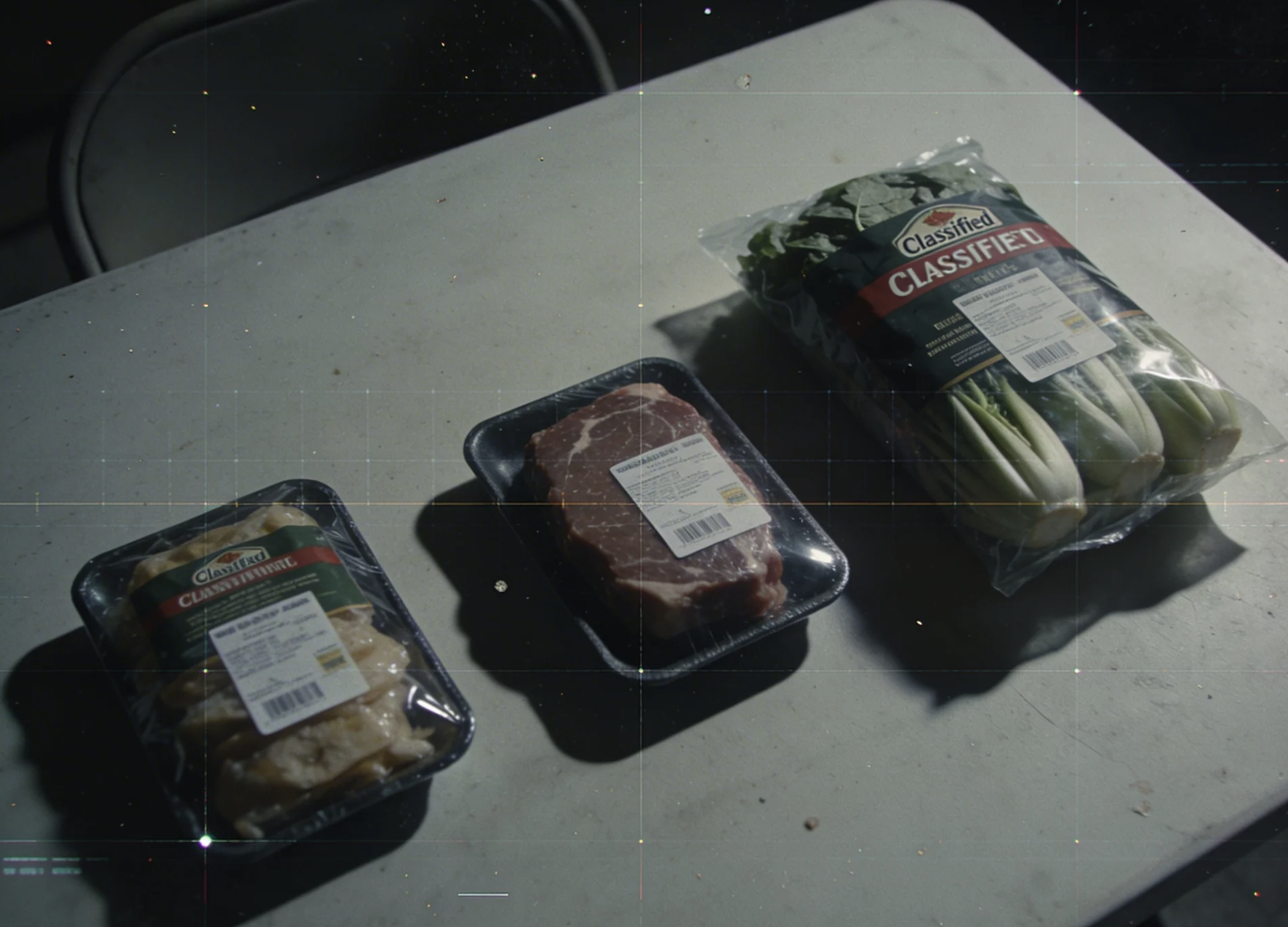
Most day-to-day life runs on a quiet assumption: there is a normal.
Prices usually sit in a familiar band.
Shelves usually cooperate.
Timelines usually repeat.
When something violates that, people notice.
But there is another scenario—slower, stranger—where the baseline itself starts to drift. Not with a bang. With a series of small edits to what “usually” means.
When “usually” thins out
A product that used to be there every trip is now there most trips.
Shipping that was reliably two days becomes three—then four—without a press release or a policy you can point to.
Promotional rhythms loosen. The discount you could set a watch by shows up less often, or in weaker form.
No single change demands attention.
In aggregate, they change what it feels like to plan.
The comparison problem
Here is the subtle part.
People still measure against an old picture of normal. So the drift doesn’t fully register as change—it registers as mild annoyance, bad luck, or a busy season that never quite ends.
You sense friction without a clean label.
Socially, that ambiguity matters. People compare notes in shorthand—“everything’s expensive,” “shipping is weird”—without anchoring to specifics. The conversation stays mood-shaped. The underlying pattern stays unexamined. That’s not stupidity; it’s how humans offload complexity. It also means shared baselines can decay in sync without anyone naming the slope.
That makes the shift hard to discuss. There’s no villain, no headline, no single incident—just a stack of “huh, that’s a little different” moments.
Individually, they’re trivia.
Collectively, they alter how much margin you have—literal and mental—before something has to give.
If you write any of it down—even casually—you’ll be surprised how quickly a pattern appears that memory alone smooths over. Not to prove a thesis. To keep your internal model honest.
Recommended reading
The 6–8 Hour Mistake Most People Make Every Night
A small issue that quietly affects how you feel the next day.
Adaptation hides the move
There is another layer: humans adapt fast.
You start building in buffer without naming it. You buy a little earlier. You keep a slightly larger stash of the boring essentials. You stop expecting the tightest delivery window.
Once enough people do that, the new behavior becomes the new floor.
What used to feel like a deviation starts to feel like common sense.
At that point, the baseline has moved—and the move is partly invisible because everyone has already adjusted around it.
You can see the same mechanics in institutions, not just households. Forecasts get padded. Safety stock creeps up. Contracts add flexibility clauses that nobody needed five years ago. Each step is reasonable. The profile of the whole organization shifts anyway—usually without a single decision labeled new normal.
From the outside, the institution still looks like itself. On the inside, the operating assumptions have already migrated—often in the name of prudence, sometimes in the name of exhaustion.
That doesn’t mean every hiccup is structural. Plenty of noise exists—weather, labor quirks, one-off vendor drama.
It does mean that when you care about orientation rather than outrage, it pays to notice when your private definition of “normal” has quietly been rewritten—and whether the rewrite is sticking.
The most important shifts are the ones people adapt to without realizing it.
Recent updates
- What’s Starting to Shift Beneath the Iran HeadlinesWhen a situation is serious enough to dominate news, the early strain often shows up somewhere quieter—routing, timing, and terms, not slogans.
- The Supply Signals Most People Miss CompletelyNot all supply disruptions look like empty shelves.
- Why Certain Price Changes Don't Show Up Where You ExpectSome of the most important pricing signals never appear in headline data.