

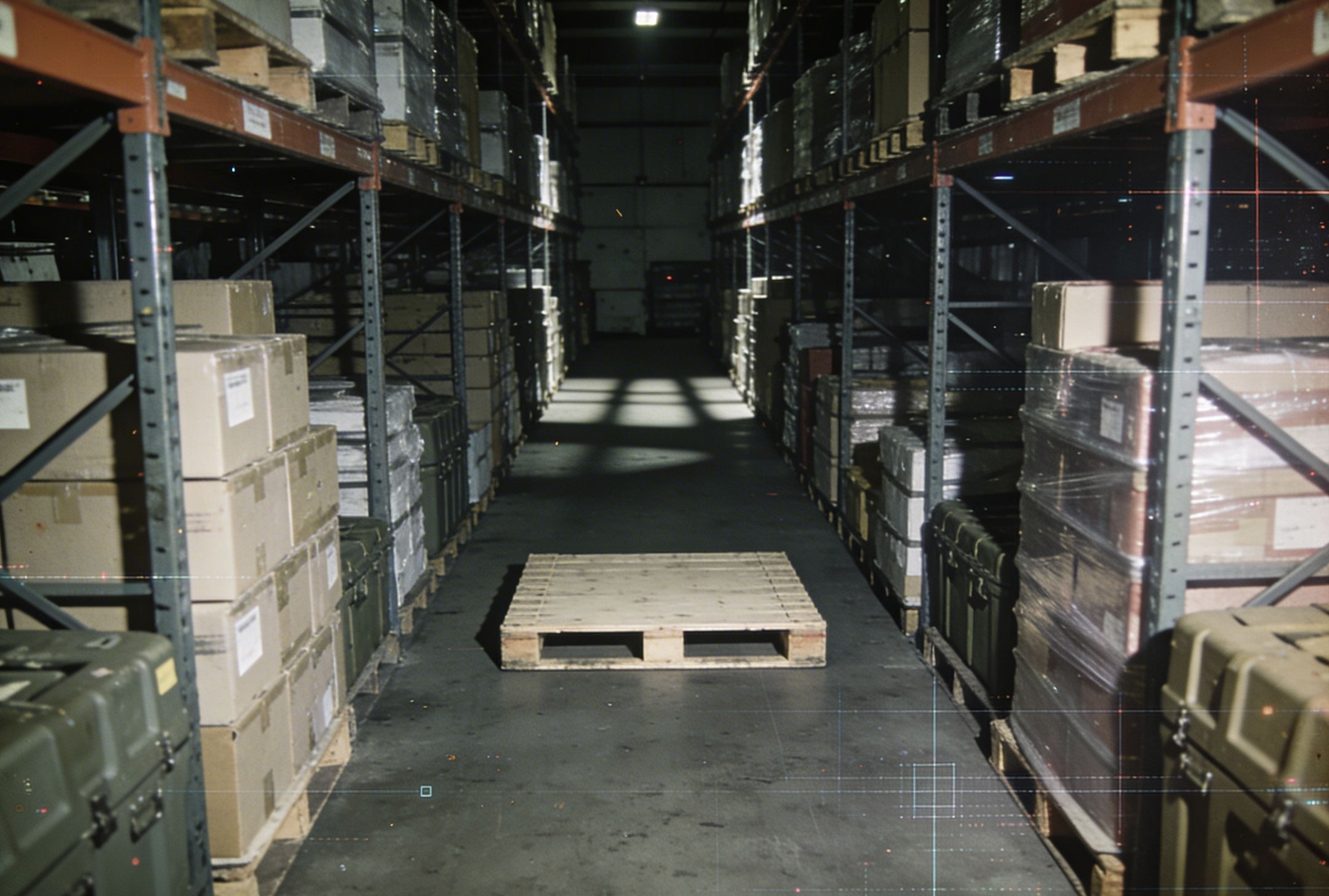
When people imagine supply trouble, they picture something theatrical.
Empty shelves.
Bold out-of-stock banners.
Headlines about shortages.
Most real strain doesn’t begin there.
It begins in small inconsistencies that are easy to rationalize away—until they stack.
Still “available”—just not the way it was
A product remains purchasable, but only from certain sellers or certain pack sizes. The word available is still true; the choice set has narrowed.
Shipping slips a day, then two. Nothing triggers a refund; nothing makes the news. The system still “works,” but slack is gone.
Inventory might turn faster in one lane and slower in another. One SKU stays hot; its neighbor sits. That can mean demand—or it can mean someone is allocating what they have.
Taken one at a time, each of these is forgettable.
Together, they often sketch a line toward friction upstream—not necessarily collapse, but not equilibrium either.
Recommended reading
The Water Problem Most People Don’t See Coming
Why water pressure, taste shifts, and aging infrastructure often show up quietly—until they don’t.
Distribution inconsistency
Instead of a clean “we’re out,” you get unevenness.
Some regions flush. Others patchy.
Some configurations in stock. Others perpetually “coming soon.”
That geography doesn’t always mean local demand. It can mean routing, allocation rules, or a supplier prioritizing certain channels when they don’t have enough for everyone.
People dismiss it as random retail noise. Sometimes it is.
When the map stays uneven for weeks, it’s worth filing mentally under something upstream is allocating—even if the public story hasn’t caught up.
Substitution pressure
Another early tell: alternatives get pushed harder—bundles, store brands, different sizes—without a clear consumer fad driving it.
Sometimes demand did shift.
Often, someone behind the counter is easing off a constrained line by steering volume somewhere safer.
Customers experience it as merchandising.
Operators read it as a workaround.
The “almost delay”
Then there is the pattern of almost.
Orders still arrive. Promises are mostly kept. But the tail of “on time” keeps stretching—first occasionally, then habitually.
Nothing “breaks.” Reliability just thins.
If you run anything with dependencies—a small business, a volunteer operation, a household with tight schedules—you’ve felt this before it becomes a story. The cost isn’t always money first; it’s attention. You start tracking shipments you used to ignore. You start confirming things you used to assume.
That’s a hard signal to complain about, which is why it propagates quietly. It’s also why it shows up before the dramatic failure modes people wait for.
Business buyers often feel this before consumers do—because their planning horizon is longer and their tolerance for “almost” is lower. When a vendor that used to be boring becomes slightly unpredictable, it shows up in spreadsheets before it shows up in culture. That doesn’t make the consumer-facing world irrelevant; it just means some of the earliest reads sit outside public view.
None of this turns you into a forecaster. It turns you into someone who notices texture—the difference between a one-off glitch and a texture that persists.
Most people ignore these cues because they aren’t cinematic.
That’s exactly why they’re useful: they’re early, diffuse, and easy to miss if you’re only watching for the movie version of disruption.
The system rarely breaks all at once.
Recent updates
- Why "Normal" Is Becoming Harder To DefineThe baseline people rely on is shifting more than they realize.
- What’s Starting to Shift Beneath the Iran HeadlinesWhen a situation is serious enough to dominate news, the early strain often shows up somewhere quieter—routing, timing, and terms, not slogans.
- Why Certain Price Changes Don't Show Up Where You ExpectSome of the most important pricing signals never appear in headline data.